Book direct — no booking fee · Free cancellation up to 24 hours · Guides speak English, French, Italian, Spanish and GermanBook direct · Free cancellation up to 24 hours

Category: Rajasthan notes

  • What to eat in Jaipur: a first-timer’s food guide

    What to eat in Jaipur: a first-timer’s food guide

    If you are wondering what to eat in Jaipur, the honest answer is that the city has two food cultures running side by side. There is Rajasthani home cooking, which is built around a desert with very little fresh vegetable supply, and there is Jaipur street food, which is fried, sweet and eaten standing up. Both are worth your time, and neither needs to make you ill if you use a little judgement.

    This guide is written by people who drive visitors around Jaipur every week, so it leans on what our travellers actually finish rather than what looks good in a photograph.

    Dal baati churma, the dish Rajasthan is known for

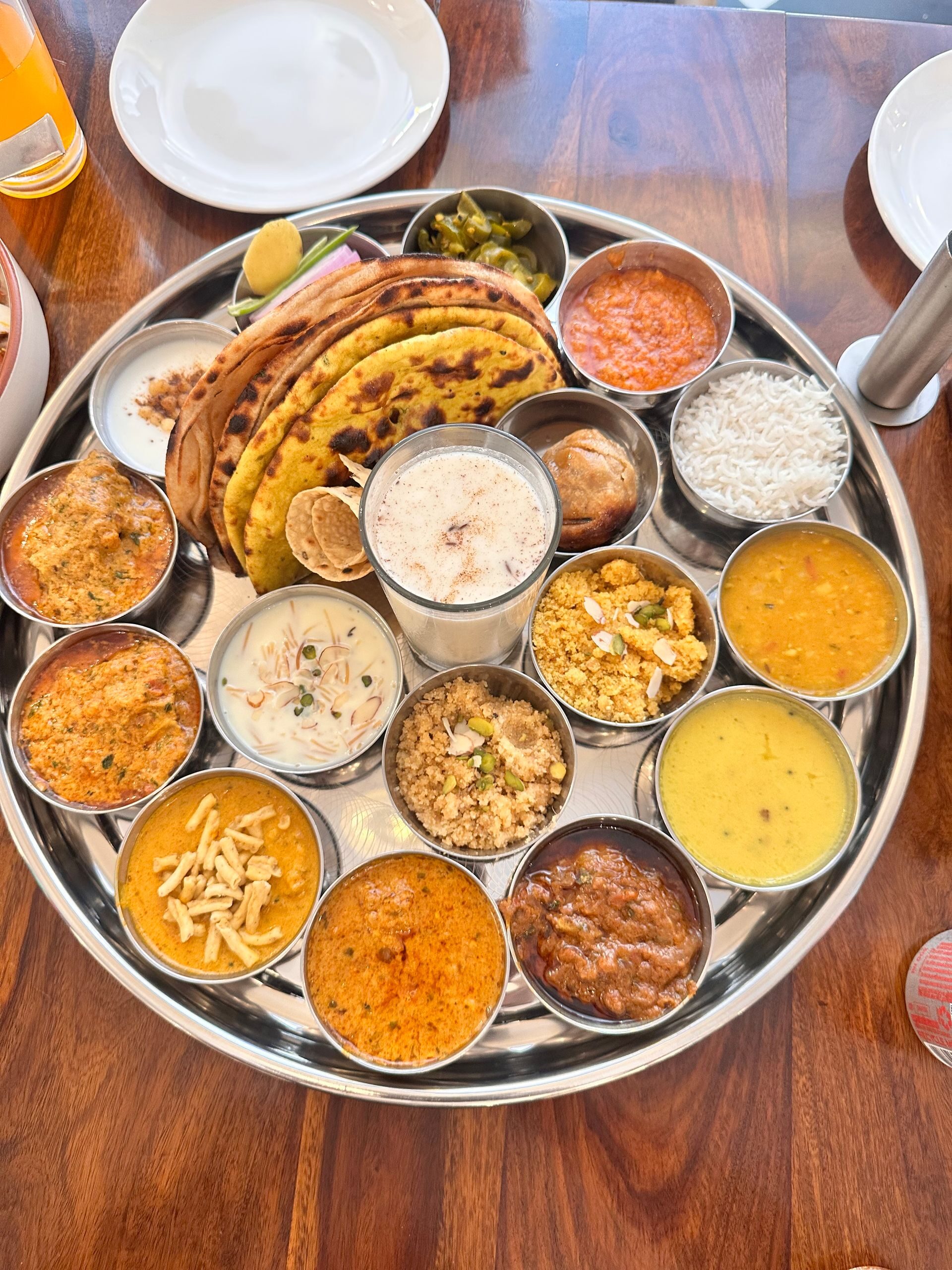
    Baati are hard wheat rolls baked in ash or an oven, cracked open and drowned in ghee. They come with dal and with churma, the same dough crumbled with sugar and more ghee. It is heavy, and it is meant to be. Eat it at lunch, not at ten at night, and share one plate between two people the first time.

    Pyaaz kachori and mirchi bada

    The classic Jaipur breakfast is a pyaaz kachori: a fried pastry filled with spiced onion, served crushed with chutney. Mirchi bada is a large mild chilli in gram flour batter. Both are made in volume from early morning, which is exactly what you want, because a high turnover stall is a safe stall. We usually stop at one on the way out of the city on the Jaipur in a day tour if the group is up early.

    Laal maas, and what to order if you do not eat meat

    Laal maas is mutton cooked with Mathania red chillies. It is hot in a clean, direct way rather than a creamy restaurant way. Ask for it mild if you are unsure, because most kitchens will adjust it.

    Vegetarians are extremely well served in Jaipur. Gatte ki sabzi, ker sangri, besan chakki and papad ki sabzi are all traditional, all vegetarian, and all come from the same logic: a desert kitchen cooking with what keeps.

    Sweets, lassi and the afternoon

    Jaipur takes sugar seriously. Ghewar in the monsoon months, feeni in winter, and mawa kachori at any time. A thick lassi in a clay cup is the standard afternoon stop. Clay cups are single use, which makes them a safer bet than a glass.

    Where to eat, and how we think about safety

    We do not publish a list of restaurants, because lists go stale and because a guide who is paid to bring you somewhere is not giving you an opinion. That is the whole point of how commission tours work in India, and it applies to food as much as to shopping.

    What we do instead is simple. Your guide will tell you which stalls near your route are busy that day, take you there, and eat with you. A few rules that have kept our travellers well for years:

    • Eat where there is a queue of local people, not a queue of tour buses.
    • Fried and just out of the pan is safer than sitting under a lamp.
    • Peel your own fruit, and skip salads on the first two days.
    • Bottled water with an intact seal, and clay or steel cups for lassi.
    • Give yourself a day before trying street food if you have just flown in.

    Fitting food into a day of sightseeing

    Food works best as a break rather than an event. On the old city walking tour we stop two or three times in three hours, which is enough to taste six or seven things without a full meal. If you would rather eat in the evening, the Jaipur by night tour is built around the lit-up city and its food stalls, and it starts after the heat has gone.

    If you have a whole day and want the forts as well, read one day in Jaipur: the order that actually works, which sets out the sequence that keeps you ahead of the crowds and still leaves time to eat properly.

    The short version

    Try dal baati churma once, at lunch. Have a pyaaz kachori for breakfast from a busy stall. Drink one lassi a day. Order laal maas mild if you eat meat, and gatte ki sabzi if you do not. Tell your guide what you cannot eat before the day starts, and they will plan the stops around it rather than around a commission.
  • Shopping in Jaipur: what to buy and what to pay

    Shopping in Jaipur: what to buy and what to pay

    Shopping in Jaipur is genuinely good, and it is also the part of a Rajasthan trip where visitors most often feel they were handled rather than helped. Both things are true at once. The city has real craft traditions that are several centuries old, and it has an industry built around driving tourists to shops that pay a cut.

    This is what is worth buying, roughly what it should cost, and how to tell the difference.

    Hand block printed textiles

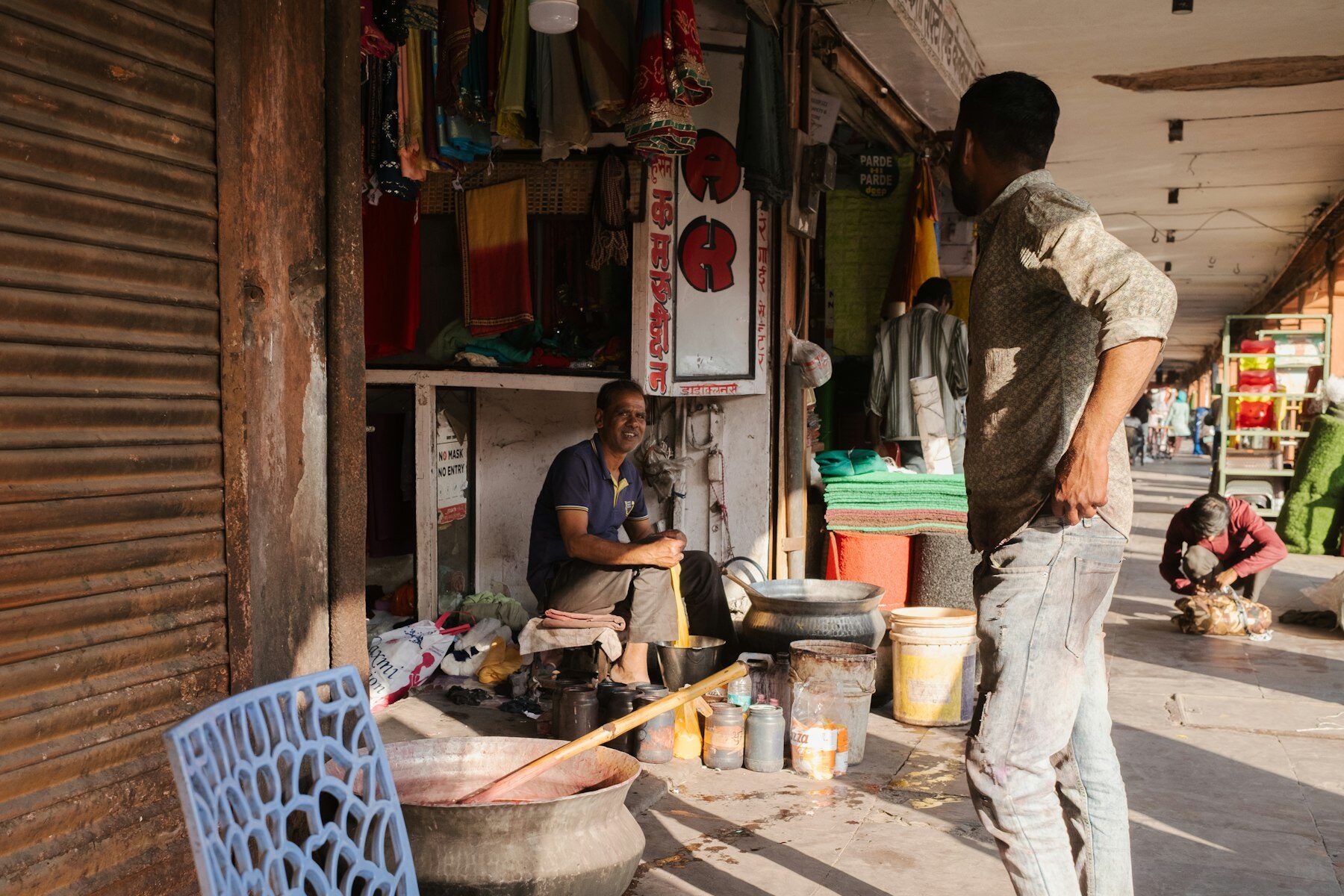
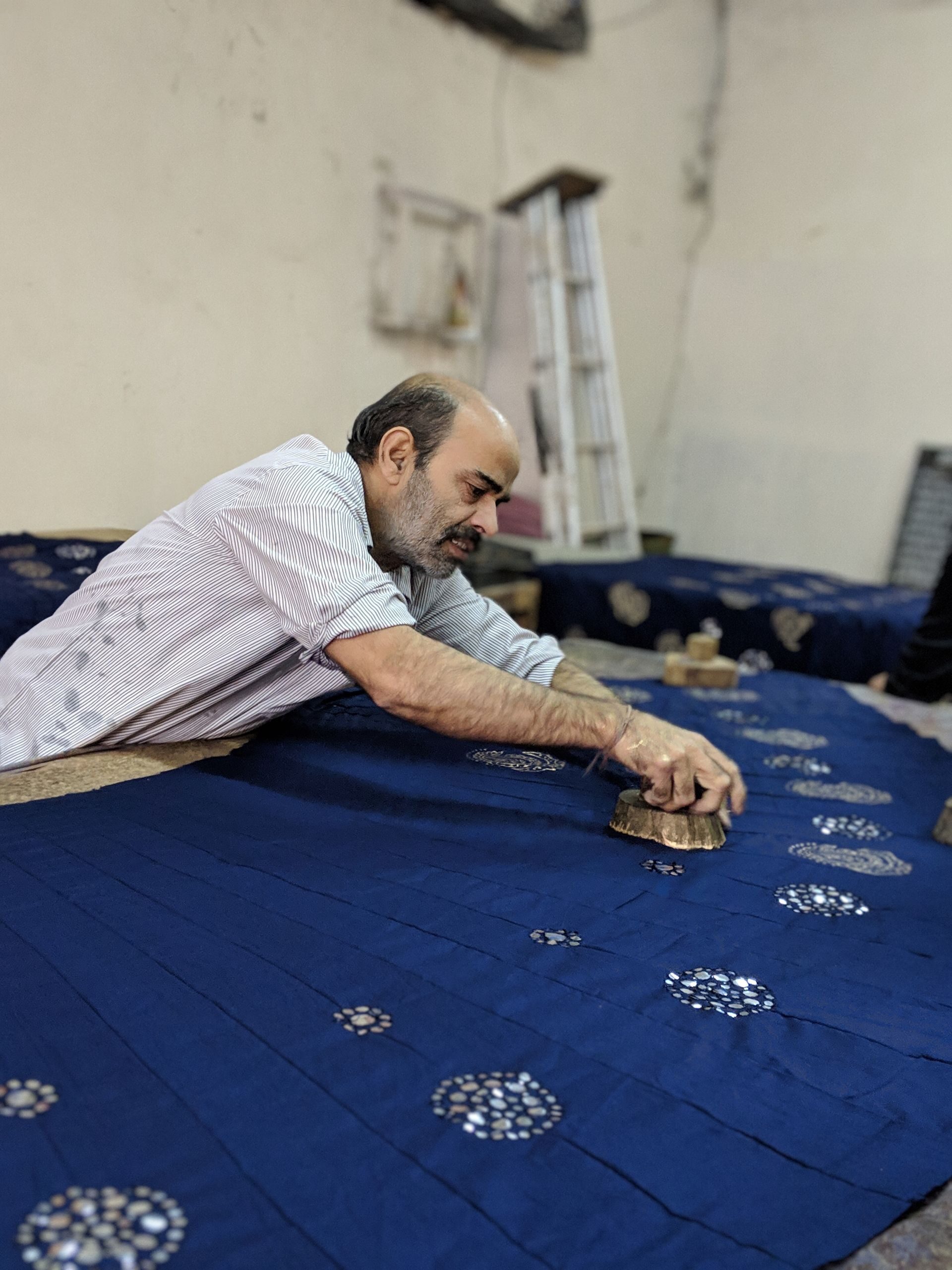
    Block printing is the craft Jaipur is best known for, and most of it happens in Sanganer and Bagru, just outside the city. A carved wooden block, natural or pigment dye, and a printer working down a length of cloth by eye.

    Signs you are looking at real hand block print: slight irregularities where the block was re-inked, a faint join line where one impression meets the next, and colour that has soaked through rather than sitting on the surface. Screen printed cloth is perfectly even, which is exactly how you spot it.

    A simple cotton block print bedsheet or tablecloth is inexpensive. Fine work on silk, or a piece using several blocks and multiple dye baths, costs many times that, and should.

    Gemstones: be careful

    Jaipur is one of the world’s largest gemstone cutting centres, so the trade is real. The scam attached to it is also real and very old: a traveller is told they can buy stones here and sell them at a profit at home, sometimes with a story about customs or a partner abroad. There is no profit. Do not buy gemstones as an investment, ever, and do not carry stones for anyone.

    Buying a stone or a piece of jewellery because you like it is fine. Ask for a certificate from a recognised laboratory, pay by card where you can, and keep the receipt.

    Blue pottery, juttis and brass

    Blue pottery is a Jaipur speciality, made from quartz rather than clay, glazed in cobalt and turquoise. It is fragile, so buy it last and pack it in clothes.

    Juttis are the flat leather slippers you will see everywhere. Embroidered ones are cheap and sized approximately, so try both feet.

    Brass and enamel work, marble inlay and miniature painting are all made in the city and all vary wildly in quality. Look at four before you buy one.

    How commission actually works

    A driver or guide who takes you to a shop is usually paid between twenty and forty per cent of whatever you spend. That money is not absorbed by the shop, it is added to your price, so the same scarf costs you more there than it does two streets away. Long, unplanned “workshop demonstrations” in the middle of a sightseeing day are the visible symptom.

    We wrote about this in more detail in how to spot a commission tour in India. On our own days out, nobody is paid to steer your afternoon: if you want to see a block printing workshop we will take you to one, and if you do not, we will not mention it.

    Bargaining without the theatre

    In the bazaars around Johari Bazaar and Tripolia, prices are flexible and a polite negotiation is normal. In fixed price emporiums and government outlets they are not. A reasonable approach is to ask the price, offer about sixty per cent of it, and settle somewhere in the middle. If you are shopping on the old city walking tour, your guide will tell you which shops are fixed price before you start.

    Getting it home

    Shops will offer to ship. Small, reputable shops usually do this properly, but you have very little recourse from another country. If the item fits in your luggage, take it with you. If it does not, pay by card and get the shipping terms in writing.

    Where shopping fits into a trip

    Shopping and sightseeing do not mix well in the same three hours: the forts are best early, the bazaars are best late afternoon when the heat drops. If you are working out how to sequence a day, one day in Jaipur explains the order we use. For an evening that is mostly markets and food rather than monuments, the Jaipur by night tour covers it, and a car and driver for the day is the easiest way to shop across several districts without carrying bags in the sun.

  • Jaipur at night: what the city looks like after dark

    Jaipur at night: what the city looks like after dark

    Most visitors see Jaipur between nine in the morning and five in the afternoon, which is the hottest, busiest and least flattering part of the day. Jaipur at night is a different city: the monuments are floodlit, the temperature drops by ten degrees or more, and the bazaars fill with people who live here rather than people visiting.

    Here is what is actually worth doing after dark, and roughly when.

    Hawa Mahal, lit

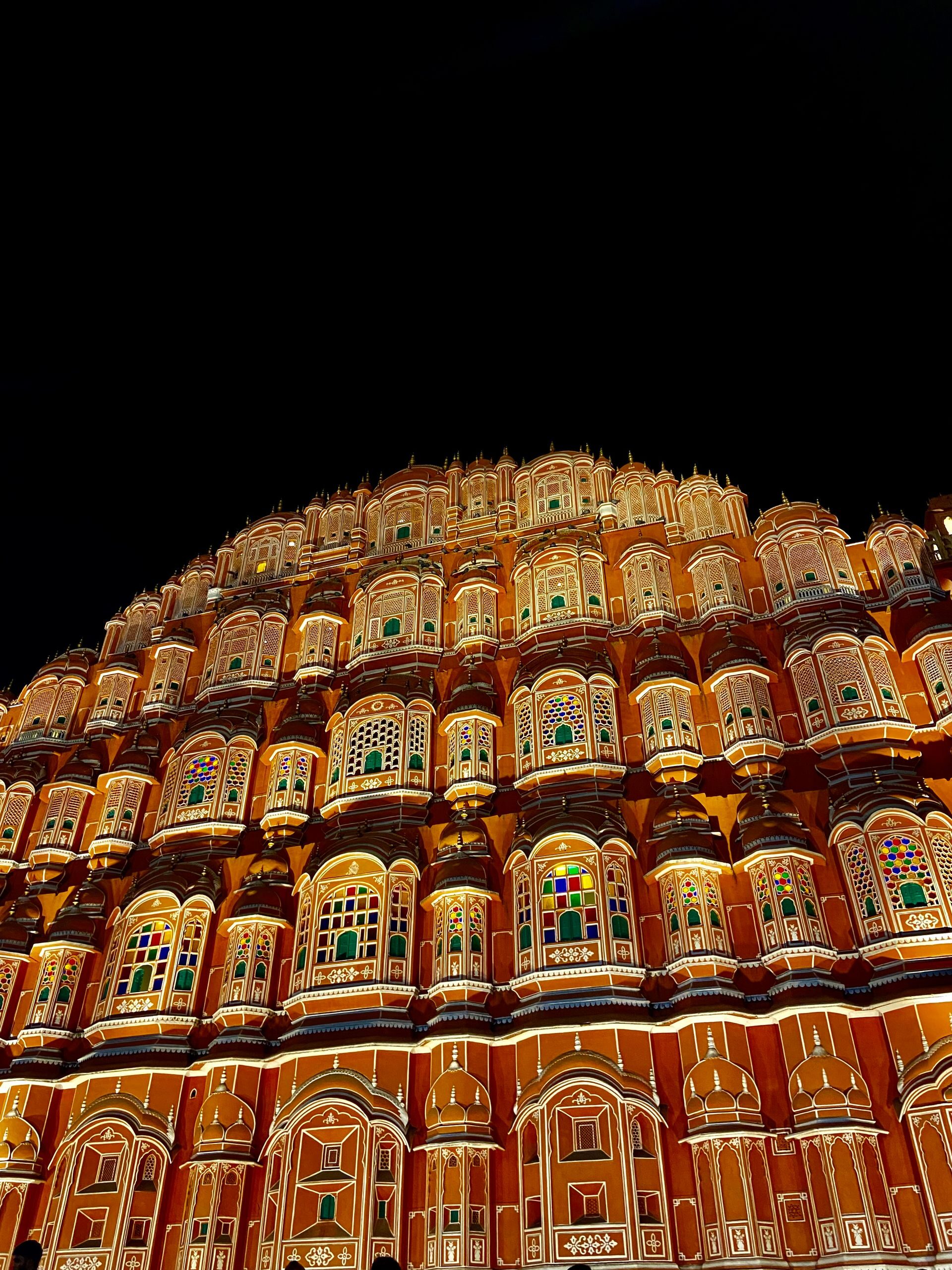
    The Palace of Winds is the photograph everyone takes at eight in the morning, standing in traffic. After dark it is lit from below, the pink turns amber, and the pavement opposite is far emptier. Between about seven and nine is the sweet spot.

    The view from Nahargarh

    Nahargarh Fort sits on the ridge above the city. From the wall you can see the whole grid Jai Singh II laid out in 1727, picked out in street lights, with the old city glowing at the centre. The drive up takes about twenty five minutes from the centre and the road is narrow, so it is worth having a driver who knows it.

    Sunset is the obvious time, and it is crowded. Arriving forty minutes after sunset usually gets you a quieter wall and better lights.

    Amber Fort’s light and sound

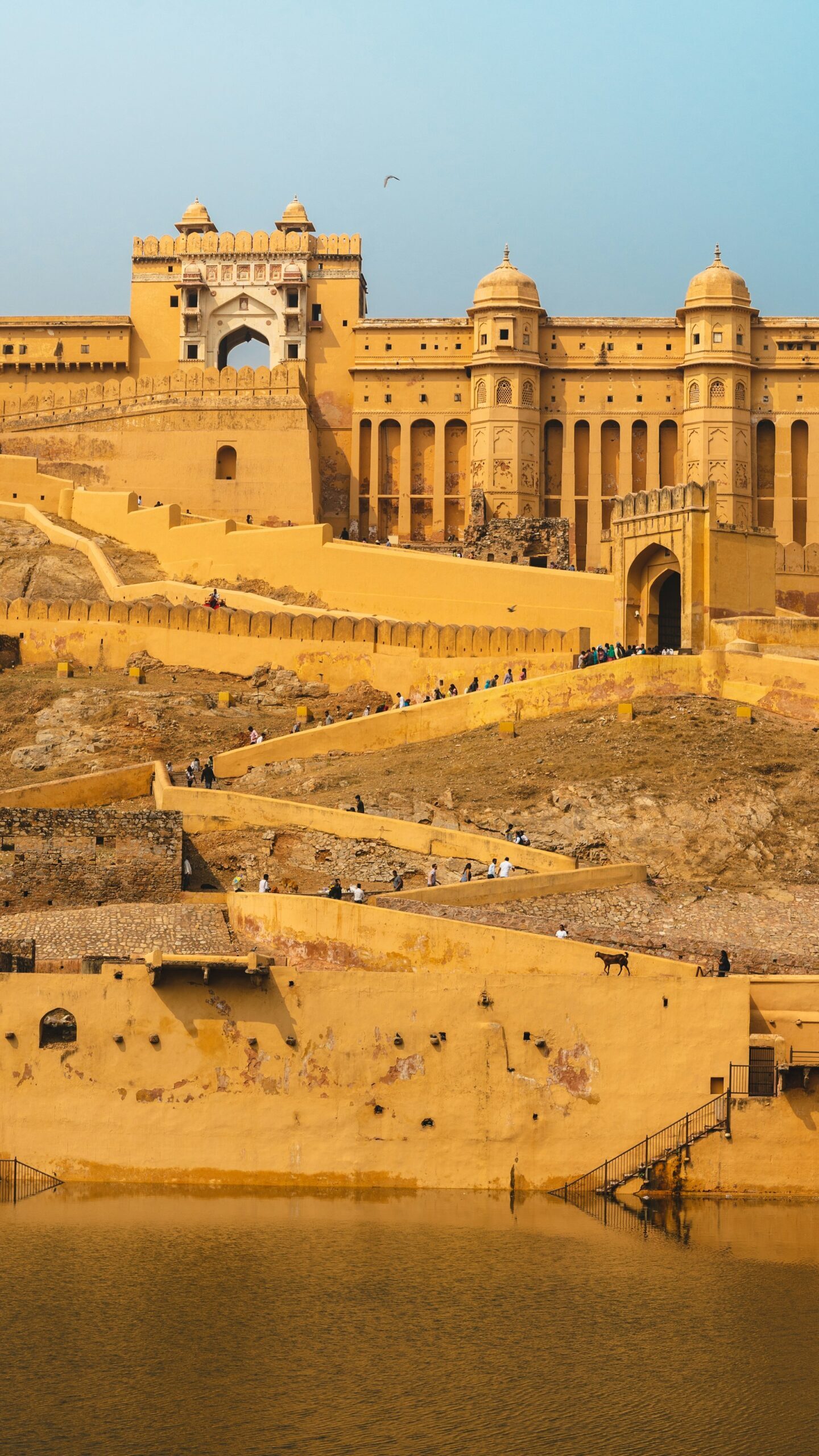
    Amber has an evening light and sound show in English and in Hindi, with the fort lit above the lake. It is not subtle, but the setting does most of the work. If you have already seen Amber in daylight on the Amber Fort and stepwells tour, the evening version is a genuinely different experience rather than a repeat.

    Night markets and bazaars

    The old city bazaars stay open late, and they are more pleasant at nine than at two. Johari Bazaar for jewellery, Bapu Bazaar for textiles and juttis, Tripolia for brass and lac bangles. Prices are the same as during the day; the crowd is more local. What to buy, and what a fair price looks like, is covered in shopping in Jaipur.

    Where the food is

    Evening is when Jaipur eats properly. Fried snacks from early evening, kulfi and lassi later, and rooftop restaurants around the old city with a view of the lit walls. If you want to know what to order, what to eat in Jaipur goes through the dishes that are actually local rather than the ones on every hotel menu.

    Jal Mahal after dark

    The water palace on Man Sagar Lake is floodlit and reflects almost perfectly on a still night. You cannot go in, and you do not need to. It is a five minute stop on the way back from Nahargarh or Amber.

    Practical notes

    • Monuments themselves close in the late afternoon. Evening is for exteriors, markets, food and views, not for interiors.
    • Traffic in the old city is heaviest between six and eight. If you can start at seven thirty, you will move more easily.
    • Women travelling alone generally find the main bazaars comfortable in the evening; quieter lanes less so.
    • Bring a light layer between November and February. Jaipur nights are genuinely cold in winter.
    • A tripod or a steady surface makes a large difference to photographs. Floodlit sandstone is forgiving.

    Making an evening of it

    If you would rather not work out the order or negotiate the traffic, the Jaipur by night tour is built exactly around this: the lit monuments, a stop or two for food, and the view from the ridge, with a car that waits for you. It pairs well with a daytime sunrise photography walk if you want the city at both ends of the light and nothing in the heat of the middle.

    And if you are planning the whole day rather than just the evening, one day in Jaipur: the order that actually works sets out the sequence we use.

  • Is Fatehpur Sikri worth adding to your Agra day?

    Is Fatehpur Sikri worth adding to your Agra day?

    Almost every Agra itinerary offers Fatehpur Sikri as an add-on, and almost no one explains what it costs you in time. So: it is about forty kilometres west of Agra, roughly an hour each way in normal traffic, and you want at least ninety minutes on site. Call it three to three and a half hours added to your day.

    Whether that is worth it depends entirely on what else you are doing.

    What Fatehpur Sikri actually is

    Akbar built a new imperial capital here in the 1570s, in red sandstone, on a ridge. He abandoned it after about fourteen years, most likely because the water supply could not sustain a city. What that leaves is unusual: a complete Mughal capital that was never rebuilt, never modernised and never really lived in afterwards.

    There are two parts, and they are separate.

    • The royal complex: Diwan-i-Khas with its extraordinary central pillar, the Panch Mahal, Jodha Bai’s palace, the treasury. This is the ticketed part.
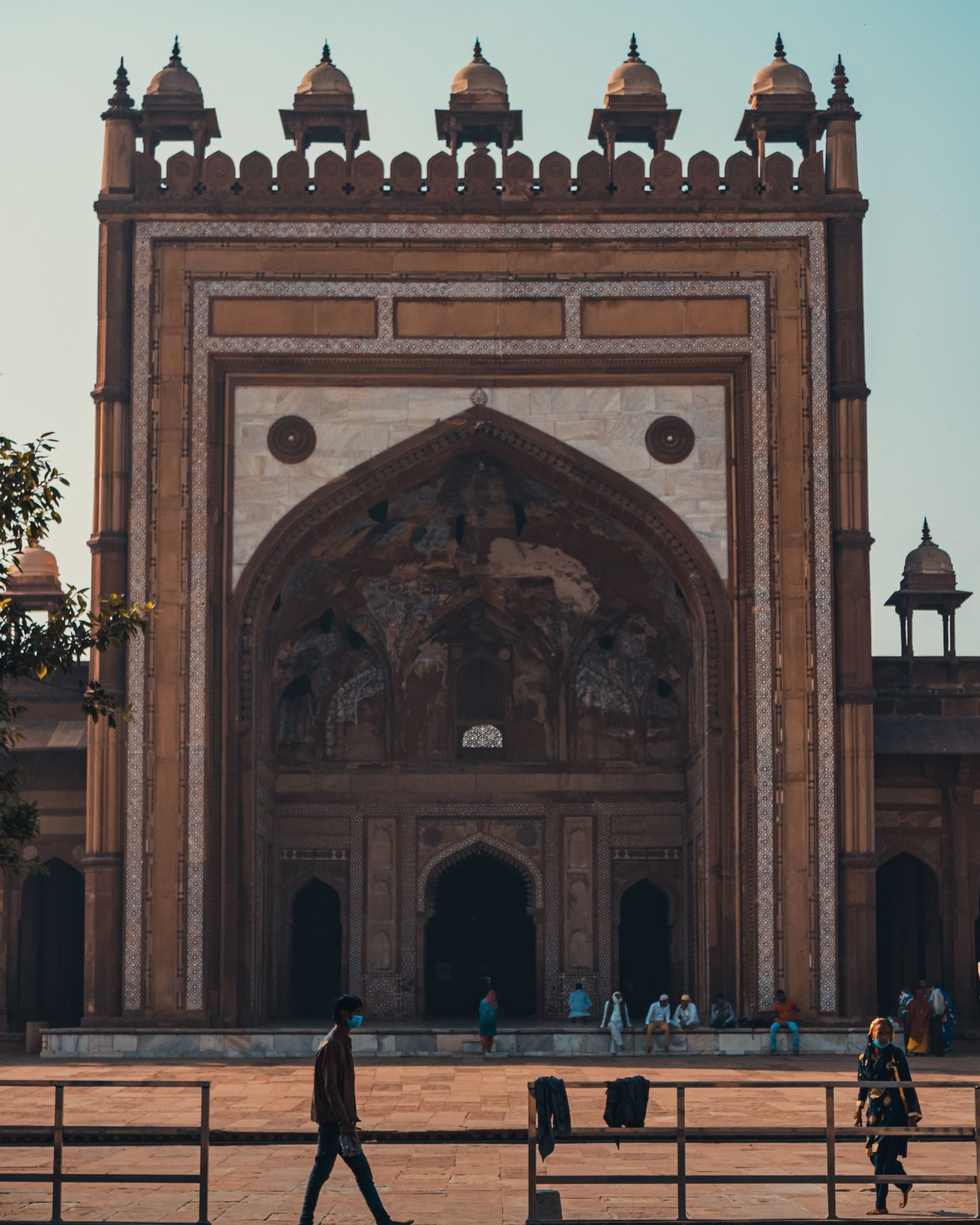
    • The Jama Masjid and Buland Darwaza: an enormous working mosque with a 54 metre gateway, still in religious use. Entry is free, and shoes come off.

    The gateway alone is worth the stop. It is the tallest of its kind anywhere and the scale does not come across in photographs.

    What it costs and how long you need

    Foreign visitor tickets for the royal complex are modest compared to the Taj Mahal, and there is an online discount, as there is at most Archaeological Survey sites. Current figures for the main monuments are on our Rajasthan travel guide, which we check and date rather than leaving to drift.

    Ninety minutes covers both parts at a reasonable pace. Two hours is comfortable. Under an hour and you are walking past things.

    When it is worth adding

    It is worth it if:

    • You are doing a full Agra day rather than a sunrise dash. On our Agra in a day tour, Fatehpur Sikri is included precisely because the day is long enough to hold it.
    • You are travelling on to Jaipur afterwards, because it is directly on that road. Adding it costs almost nothing in driving time.
    • You like architecture more than you like crowds. It is far quieter than the Taj.

    When to skip it

    Skip it if:

    • You are doing the Taj Mahal sunrise trip from Jaipur and returning the same day. That day is already thirteen to fourteen hours. Adding three more is not a good trade.
    • You are travelling with young children or anyone who tires in heat. There is a lot of open sandstone and very little shade.
    • It is a Friday. The Taj Mahal is closed on Fridays, which changes the shape of the whole day, and the mosque is busiest.

    Practical notes

    • Private vehicles stop at a car park and a short shuttle takes you up. Your driver cannot take you to the gate.
    • Guides and “guides” both work the entrance. An official guide carries a government licence card with a photograph. Ours do, which is the point of not booking a commission tour.
    • Shoes come off at the mosque. Bring socks, because the stone gets very hot.
    • There is little water for sale inside the royal complex. Carry your own.

    Fitting it into a Rajasthan trip

    The neat version is this: see the Taj Mahal at sunrise, see Agra Fort mid morning, eat, then take Fatehpur Sikri in the early afternoon on your way west. You arrive in Jaipur in the evening having seen three major sites without doubling back on yourself.

    That sequence is exactly how the Agra day tour runs when it ends in Jaipur. If you are coming the other way, from Delhi, the route and the sensible stops are in Delhi to Jaipur by road.

  • One day in Delhi: Old and New without the rush

    One day in Delhi: Old and New without the rush

    Delhi is two cities sharing a name. Shahjahanabad, which everyone calls Old Delhi, is a seventeenth century Mughal capital of lanes and mosques. New Delhi is a twentieth century imperial capital of roundabouts and lawns. One day in Delhi is enough to see both properly, provided you do them in the right order and do not try to add a third thing.

    This is the route we use, and why.

    Start in Old Delhi, early

    Old Delhi is at its best between about eight and eleven. The lanes are open, the light comes down between the buildings, and the crowds have not built. By one in the afternoon Chandni Chowk is difficult.

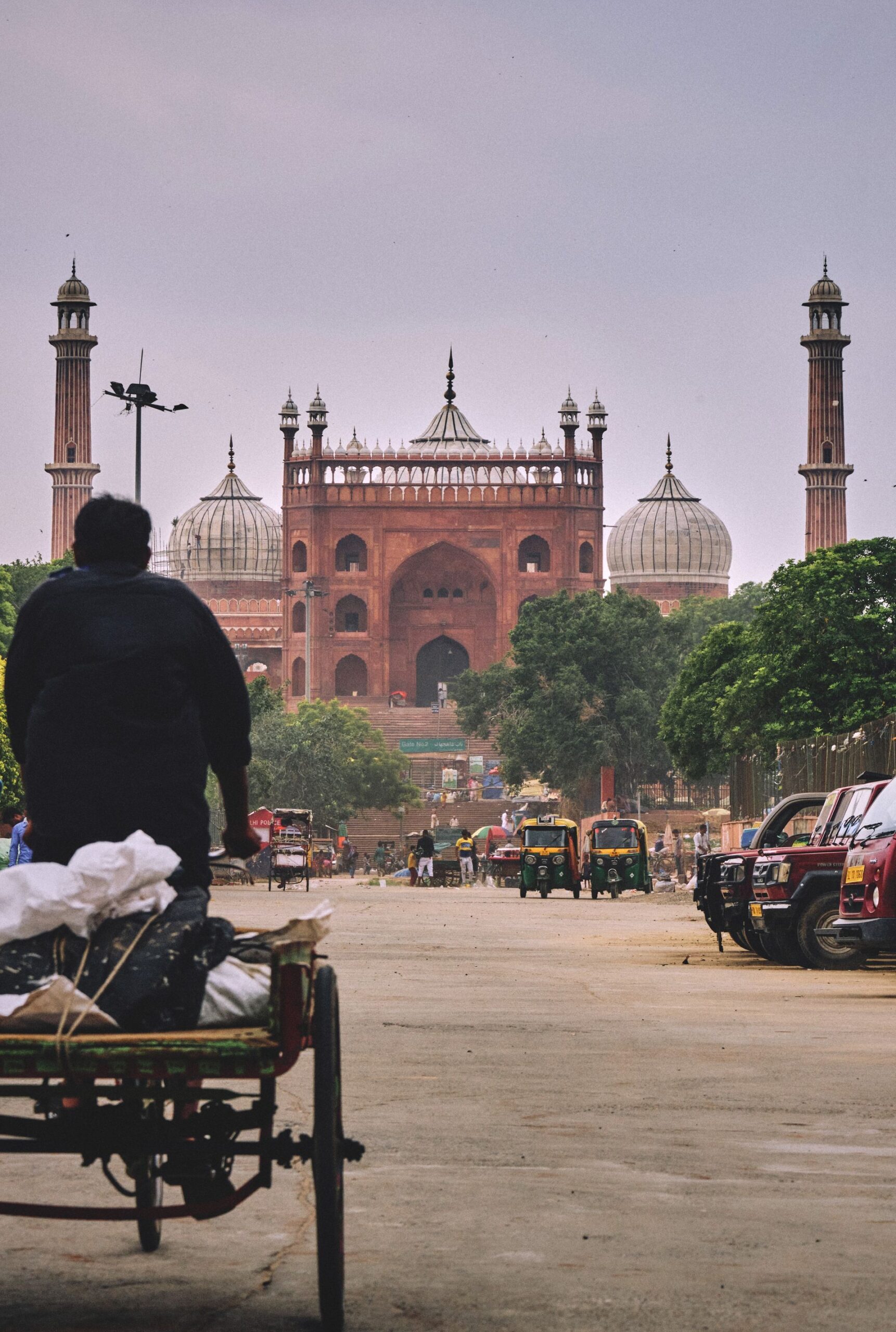
    Begin at the Jama Masjid, India’s largest mosque, finished in 1656. Courtyard entry is free, there is a charge for cameras, and the minaret climb is worth it for the view over the rooftops towards the Red Fort. Shoulders and knees covered, shoes off.

    From there, walk into Chandni Chowk. The spice market at Khari Baoli, the silver lanes, the paratha alley. This is walking territory, not driving territory. A cycle rickshaw for part of it is genuinely the practical choice rather than a tourist novelty.

    Red Fort, or not

    The Red Fort is across the road and it is a major Mughal monument. It is also large, hot and, for many visitors, less rewarding per hour than Humayun’s Tomb. If your day is tight, this is the thing to drop. It is closed on Mondays.

    Lunch, then cross over

    Eat in Old Delhi rather than driving to a hotel. Parathas, kebabs, chaat — the same rules apply as anywhere in India, and they are set out in our Jaipur food guide, which travels well.

    Then move south and west, which is where the day changes character.

    Humayun’s Tomb

    Built in the 1560s for the second Mughal emperor, and the building the Taj Mahal is descended from: the same charbagh garden, the same central dome, eighty years earlier and in red sandstone. It is quieter than almost anything of comparable importance in India, and the late afternoon light on the sandstone is the best of the day.

    If you are also going to Agra, seeing Humayun’s Tomb first makes the Taj Mahal make far more sense. That is the argument for pairing this with the Taj Mahal sunrise trip later in a trip rather than earlier.

    Qutub Minar

    A 73 metre victory tower begun in 1193, surrounded by the ruins of Delhi’s earliest Islamic complex, including an iron pillar that has not rusted in sixteen hundred years. It sits in a park in south Delhi. Late afternoon suits it.

    India Gate and the government quarter

    Finish by driving through Rajpath past the Secretariat buildings and India Gate at dusk. You do not need to stop for long, and there is nowhere to park anyway. Fifteen minutes and a couple of photographs.

    The practical shape of the day

    • Old Delhi 8:00 to 12:00, on foot.
    • Lunch 12:00 to 13:15.
    • Humayun’s Tomb 14:00 to 15:15.
    • Qutub Minar 15:45 to 17:00.
    • India Gate and Rajpath at dusk.

    Monday closes the Red Fort; most other sites stay open. Traffic between north and south Delhi in the middle of the day is the single biggest variable, which is why the walking half comes first.

    Doing it with a car and a guide

    Delhi is the one Indian city where we strongly recommend not driving yourself and not relying on picking up transport between sites. The distances are large and the parking is not casual. Our Old and New Delhi in a day tour runs this exact route with a licensed guide for the walking and a car that meets you where you come out.

    If Delhi is your arrival city and Jaipur is next, you do not need to double back: Delhi to Jaipur by road covers the stops worth making, and the Delhi to Jaipur transfer turns the drive into a sightseeing day instead of five wasted hours.

  • Udaipur in two days: lakes, palaces and timing

    Udaipur in two days: lakes, palaces and timing

    After Jaipur and Agra, Udaipur is a relief. It is small, it is built around water, and most of what you want to see is within walking distance of one lake. Two days in Udaipur is the right amount: one for the palace and the old city, one for the lake and the hills. Here is how they fit together.

    Day one: the City Palace and the old city

    The City Palace is the largest palace complex in Rajasthan, built up in stages from 1559 by successive Maharanas of Mewar. It is not one building but a row of them along the eastern shore of Lake Pichola, joined by courtyards, narrow stairs and mirrored rooms.

    Go early. It opens in the morning, it takes two to three hours, and by eleven the corridors are slow. The museum ticket and the general entry ticket are separate; the museum is the part worth paying for.

    Afterwards, walk. The lanes between the palace and Jagdish Temple are full of miniature painting studios, some of which are genuinely workshops and some of which are shops with a painter sitting in the window. The difference matters for the same reason it does in Jaipur, which we set out in shopping in Jaipur.

    Jagdish Temple itself, built in 1651, is a working Hindu temple in the middle of the old city. Shoes off, be unobtrusive, and it is free.

    Day one, evening: the lake at sunset

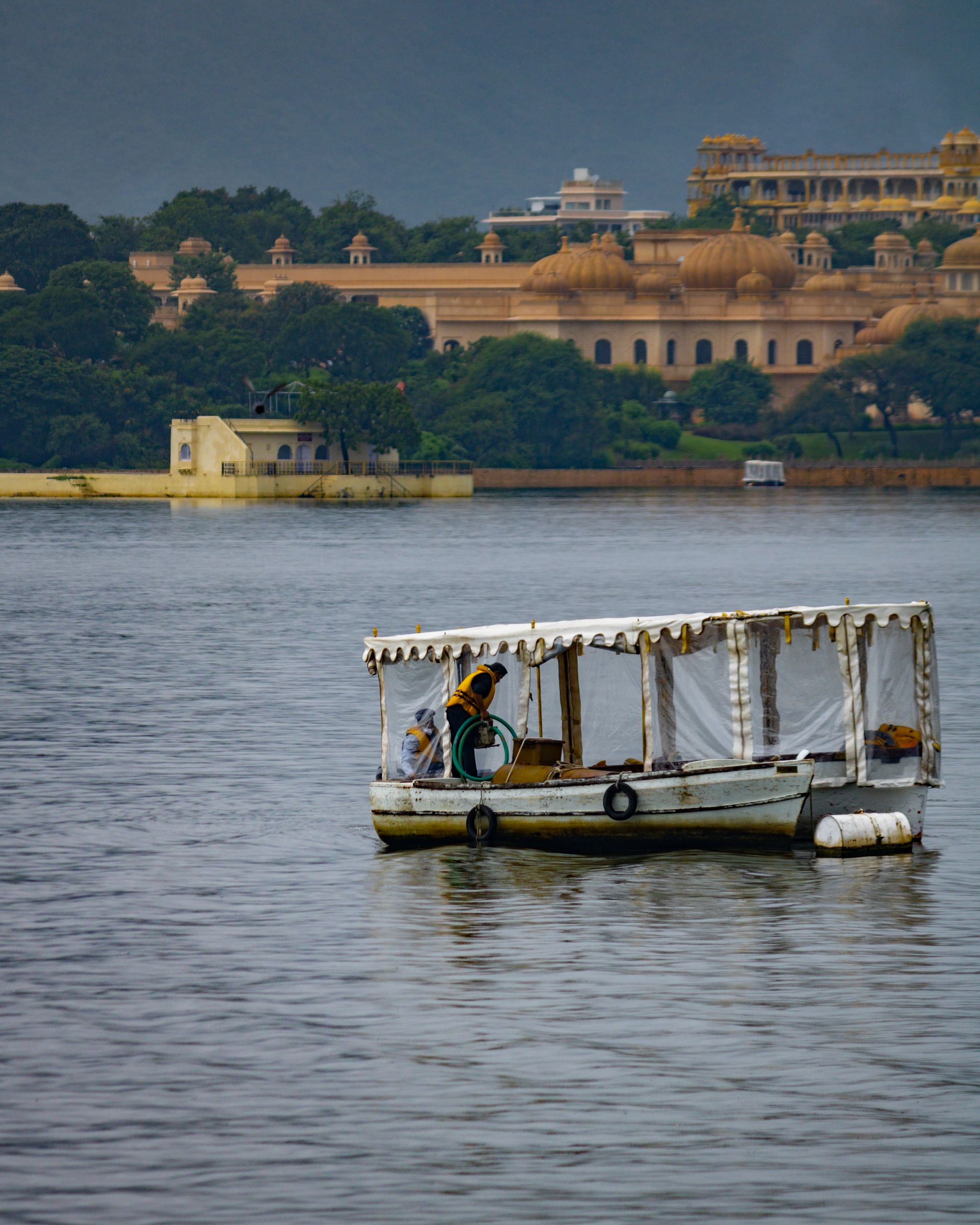
    The boat ride on Lake Pichola from Rameshwar Ghat is the thing everyone does and it is worth doing. The last boat before sunset is the one to take: you pass the Lake Palace and Jag Mandir with the Aravalli hills going pink behind the city.

    If the boat is full, the rooftop restaurants on the Hanuman Ghat side look back at the palace and get the same light, more cheaply.

    Day two: Sajjangarh, Saheliyon ki Bari and the countryside

    The Monsoon Palace, Sajjangarh, sits on a hill above the city inside a wildlife sanctuary. It is a shell inside, and that is not the point: the view over the lakes and the hills at the end of the day is the best in Udaipur. Go late afternoon. Private cars are not allowed to the top, so there is a shuttle.

    Saheliyon ki Bari, the garden of the maids of honour, is small, formal and has fountains that run on gravity alone. Thirty minutes.

    If you have energy, Eklingji and Nagda, about twenty kilometres north, are eighth century temples in a quieter setting and almost never busy.

    If you only have one day

    Cut day two entirely. City Palace in the morning, old city on foot after lunch, boat at sunset. That is a complete, unhurried day and it is what the Udaipur city and lakes tour is built around.

    Getting to Udaipur from Jaipur

    Udaipur is roughly 400 kilometres south of Jaipur, which is six to seven hours by road, or an hour by air. Most people fly one way and drive the other, and the drive is worth doing once: it goes through Ajmer and past Chittorgarh, which is the largest fort in India and a reasonable lunch stop if you leave early.

    If you are building a Rajasthan route, the usual shape is Delhi to Jaipur to Agra and then south to Udaipur, or the reverse. Delhi to Jaipur by road covers the northern leg, and a car and driver by the day is the simplest way to handle the long stretches without committing to a fixed group itinerary.

    When to go

    Udaipur is at its best between October and March. The monsoon, July to September, fills the lakes and the hills go green, which is beautiful and also means rain. April to June is very hot. Month by month detail for the whole state is in when to visit Rajasthan.

    A note on the lake

    Lake Pichola is artificial, dammed in 1362, and it depends on the monsoon. In a dry year the water drops and the boats stop running. If the lake is the reason you are going, check before you book a hotel with a view, and ask us — we will tell you what it actually looks like this month rather than what the photographs show.

  • Delhi to Jaipur by road: the stops worth making

    Delhi to Jaipur by road: the stops worth making

    Delhi to Jaipur is about 280 km. Driven straight it is four to five hours of highway and a tea stop. Driven as a day, it is a far better introduction to Rajasthan than arriving at lunchtime and going straight to a hotel.

    The stops below add three to four hours. If you are moving hotels anyway, the day costs you nothing you were using for something else.

    Neemrana Fort Palace

    About two hours out of Delhi, a fifteenth-century fort built into a hillside in tiers and now run as a hotel. Non-residents can usually visit for an entry fee that is redeemable against lunch, which makes it the most civilised possible place to break the drive. Go up to the top terraces; the view back over the plain is the moment you understand you have left the Delhi basin.

    Chand Baori at Abhaneri

    This one is a detour off the direct route — it sits closer to the Jaipur–Agra road — so it belongs on a Delhi–Agra–Jaipur triangle rather than a straight Delhi–Jaipur run. But if your route allows it: 3,500 steps in perfect symmetry descending thirteen storeys into the ground, built in the ninth century as a reservoir. There is nothing else quite like it in India and it takes twenty minutes.

    Samode, if you want the arrival to feel like something

    Forty minutes short of Jaipur, a painted palace in a village at the end of a valley. The Sheesh Mahal there is a smaller, quieter cousin of Amber’s and you will likely have it to yourself. It works particularly well as the last stop before the city, when a fort you can walk around in half an hour is more welcome than another two-hour monument.

    Practical notes

    • Leave Delhi before eight or after ten. The window in between is the worst of the city’s traffic and can cost you an hour before you reach open road.
    • Eat at Neemrana or at a highway dhaba, not in between. The stretch after Behror is thin on good options.
    • Tolls are paid by us, not by you, on our transfers — but do ask, because on a cheap quote they often are not.
    • Arrive before dark if you can. Jaipur’s walled city is much easier to orientate yourself in with daylight left.

    The alternative

    There is a fast train between Delhi and Jaipur, and for a solo traveller on a budget it is a perfectly good option — roughly four and a half hours, comfortable, and you arrive in the middle of the city. What you lose is the stops, and the ability to change your mind at eleven in the morning.

    Our Delhi to Jaipur transfer includes the stops as standard rather than as an upsell. Tell us which of them appeal and we will shape the day around it.

  • Amber Fort in three hours: what to see, and what to skip

    Amber Fort in three hours: what to see, and what to skip

    Amber is four courtyards on a hillside, built over about a hundred and fifty years, and most visitors see the first two and a half. Here is a route that fits three hours and takes in the parts that make it worth the climb.

    Getting up there

    Three ways: on foot up the cobbled ramp, by jeep, or by elephant. The walk is about fifteen minutes and is genuinely pleasant early in the day. The jeep is quick. We do not arrange elephant rides — the welfare questions around them are unresolved and we would rather not be part of it.

    Arrive at eight, when it opens. Not half past nine. The difference in the Sheesh Mahal alone is worth the alarm.

    Jaleb Chowk, the first courtyard

    This is where the returning armies assembled. It is large, largely empty, and most people cross it in ninety seconds. Stop at the far end and look back at the wall running up over the ridge — that is the fortification line connecting Amber to Jaigarh above, and it tells you what this place was for before it was beautiful.

    Diwan-i-Aam, the second courtyard

    The Hall of Public Audience: a raised platform, double rows of columns, elephant capitals. Look up at the capitals rather than out at the view. Then the Ganesh Pol, which is the gateway everyone photographs, and correctly — the frescoed facade above it is the best-preserved painted surface in the complex.

    The third courtyard: Sheesh Mahal and Sukh Niwas

    The mirror palace is the famous room and it deserves the fuss. It is also small, and by eleven it is a scrum. Early, with the light coming in at an angle, the ceiling does the thing it was built to do.

    Directly opposite, and skipped by most of the tour groups, is Sukh Niwas — the pleasure hall, cooled by water running down a marble channel through the room and out into the garden. It is a seventeenth-century air-conditioning system and it worked. Stand in the doorway for a minute and you can still feel the draught it was designed to create.

    The fourth courtyard, which almost nobody reaches

    This is the zenana, where the women of the court lived: a ring of twelve apartments around a central courtyard, arranged so the maharaja could visit one without the others knowing. The rooms are plainer and largely unrestored, and it is the quietest part of the fort by a long way. It is also the part that makes Amber feel like somewhere people lived rather than a monument.

    What to skip

    • The light and sound show, unless you are staying in Jaipur specifically for an evening and have already seen the fort by day.
    • The souvenir shops inside the second courtyard. Everything there is cheaper three kilometres down the hill.
    • Jaigarh on the same morning, if you only have one day. It is a fine fort with an enormous cannon, and it will not get the attention it deserves as your second stop before lunch.

    A licensed guide turns Amber from an hour of pretty rooms into a story about a family, which is the difference worth paying for. Our Amber tours run first thing in the morning for exactly the reasons above.

  • How to spot a commission tour in India, and why it matters

    How to spot a commission tour in India, and why it matters

    We are a Jaipur company writing about a Jaipur problem, so read this with that in mind. But the mechanics below are not in dispute and every honest operator in this city knows them.

    How it works

    A shop — carpets, gems, textiles, marble inlay — pays a driver or a guide a percentage of whatever you spend. Commonly a large percentage. The shop covers it by raising its prices, so you pay the commission whether you know about it or not.

    Because the commission can be worth more than the driver’s fee for the day, the economics of a cheap tour often depend on it. That is why a car and driver for a full day can be quoted at a price that would not cover the fuel: the real product is not the tour, it is delivering you to two shops.

    What it costs you

    • Time. Two shopping stops is ninety minutes, usually taken out of the monuments.
    • Money. You are paying an inflated price and calling it a bargain.
    • The day itself. The pressure to buy is the thing people remember, and it is not what they flew here for.

    How to tell before you book

    Ask these four questions. The answers are more revealing than any review page.

    • “Does the itinerary include any shopping stops?” A straight no, in writing, is the answer you want. “Only if you want to” is fine if it is followed by “and we will not take you unless you ask”.
    • “Is the driver paid a commission by any shop?” Vague answers are answers.
    • “What is the car and driver rate for the day, separately from the tour?” If the full-day price is implausibly low, something else is paying for it.
    • “Is the guide government-licensed for this region?” Licensed guides sit an examination and can lose the licence. It is a real constraint and it changes behaviour.

    If the price does not cover the day, something else is paying for it, and that something is you.

    If you do want to shop

    Plenty of travellers come to Jaipur specifically for block-printed textiles, blue pottery or gemstones, and they should. The difference is direction: you choose the shop and say so, rather than being taken to one. Ask for a workshop where things are actually made, go in the morning, and be entirely comfortable walking out.

    Where we stand

    We do not take anyone to a shop for commission, and our drivers are not paid by shops. If you ask to see a block-printing workshop or a gem cutter we will take you to one, and we will tell you plainly that we have no financial interest in whether you buy anything.

    That is not a moral position so much as a business one. Our tours are priced to cover the day, so they do not need to be subsidised by your afternoon.

  • When to visit Rajasthan, month by month

    When to visit Rajasthan, month by month

    Ask anyone when to visit Rajasthan and you will be told October to March. That is correct and not very useful, because November and March are not the same trip, and because the months everyone warns you off have things to recommend them.

    October — the door opening

    The monsoon has usually let go by early October and the landscape is still green from it, which is the one time of year Rajasthan does not look like a desert. Days are warm, in the low thirties, and the light is clean. Festival season begins. This is an underrated month.

    November to February — the season, and it earns the name

    Days in the low to mid twenties, dry air, reliable light. This is when the forts photograph the way they do in the brochures and when walking around a city for six hours is a pleasure rather than an endurance test.

    The thing nobody mentions when you are packing in August: desert nights in December and January get genuinely cold, close to freezing out towards Jaisalmer and Bikaner. Bring a jacket. You will feel silly putting it in the case and grateful at six in the morning at Amber.

    This is also the busiest and most expensive window. Book earlier than feels necessary, particularly around Christmas and New Year.

    March — the last good month, and Holi

    Early March is still comfortable. By the end of it the heat has arrived. Holi falls in March most years and is genuinely worth planning around, with the caveat that it is loud, chaotic and not for everyone.

    April to June — hot, and not impossible

    May afternoons above 40°C are ordinary. It sounds disqualifying, and for a packed itinerary it is. But a Rajasthan summer day done properly — out at six, back indoors by eleven, out again at five — is quiet, cheap, and you will have Amber Fort almost to yourself.

    If you come in summer, come with a plan built around the heat rather than one that ignores it.

    July to September — the monsoon

    Humid, green, dramatic, and the cheapest time of year by a distance. Rain comes in afternoon bursts rather than all-day drizzle. The forts against wet skies are extraordinary, Udaipur’s lakes actually fill, and the crowds are gone.

    The trade-off is that an outdoor plan will get rearranged at least once. If you are flexible about which day you do what, the monsoon is a better trip than its reputation suggests.

    The short version

    • First visit, want the postcard: November to February.
    • Want the season without the crowd: October or early March.
    • Photographers and people who like an empty fort: monsoon.
    • Tight budget, flexible plan: July to September.
    • Avoid: a packed multi-city itinerary in May and June.

    Whenever you come, tell us the dates and we will build the day around the weather rather than in spite of it.