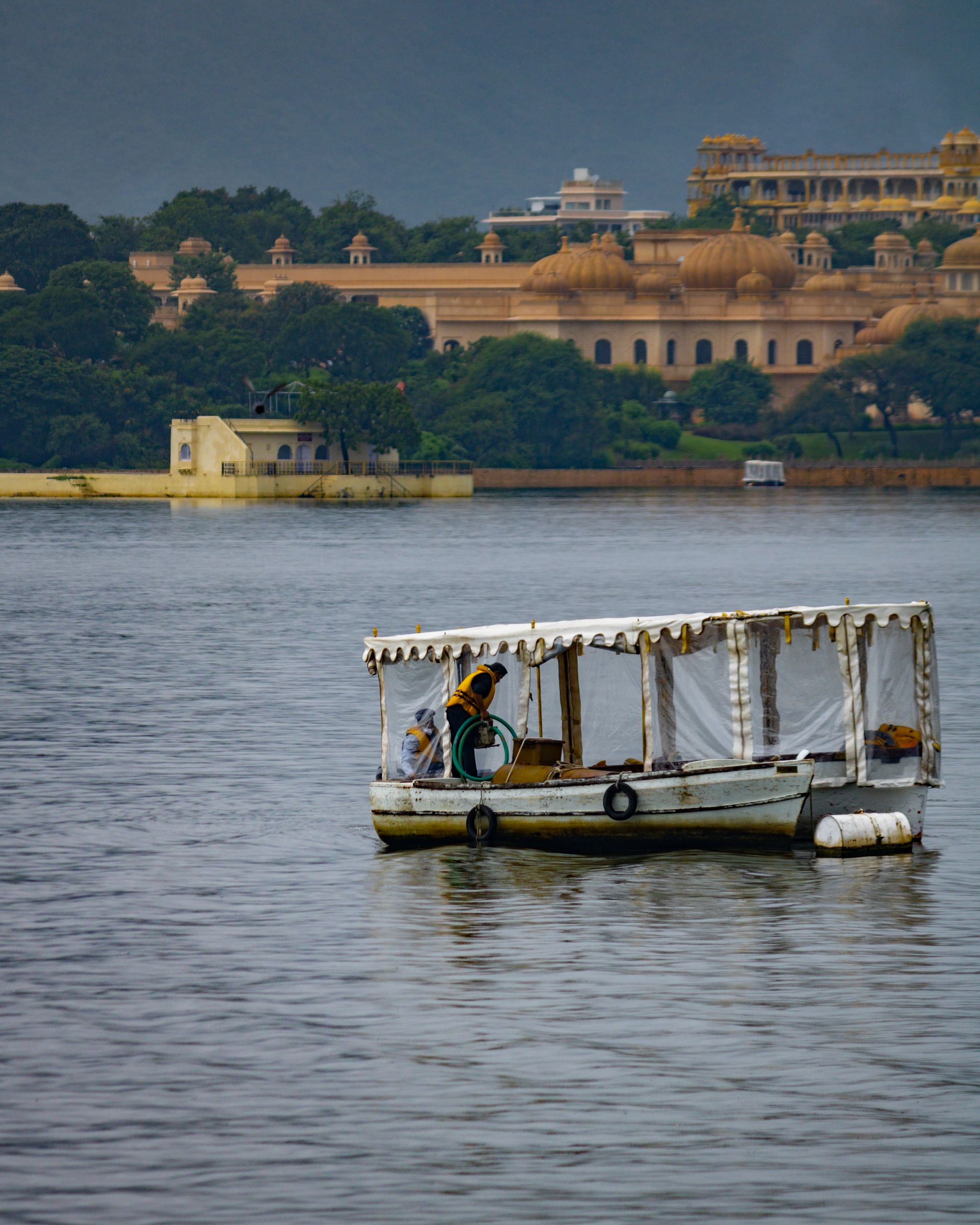
After Jaipur and Agra, Udaipur is a relief. It is small, it is built around water, and most of what you want to see is within walking distance of one lake. Two days in Udaipur is the right amount: one for the palace and the old city, one for the lake and the hills. Here is how they fit together.
Day one: the City Palace and the old city
The City Palace is the largest palace complex in Rajasthan, built up in stages from 1559 by successive Maharanas of Mewar. It is not one building but a row of them along the eastern shore of Lake Pichola, joined by courtyards, narrow stairs and mirrored rooms.
Go early. It opens in the morning, it takes two to three hours, and by eleven the corridors are slow. The museum ticket and the general entry ticket are separate; the museum is the part worth paying for.
Afterwards, walk. The lanes between the palace and Jagdish Temple are full of miniature painting studios, some of which are genuinely workshops and some of which are shops with a painter sitting in the window. The difference matters for the same reason it does in Jaipur, which we set out in shopping in Jaipur.
Jagdish Temple itself, built in 1651, is a working Hindu temple in the middle of the old city. Shoes off, be unobtrusive, and it is free.
Day one, evening: the lake at sunset
The boat ride on Lake Pichola from Rameshwar Ghat is the thing everyone does and it is worth doing. The last boat before sunset is the one to take: you pass the Lake Palace and Jag Mandir with the Aravalli hills going pink behind the city.
If the boat is full, the rooftop restaurants on the Hanuman Ghat side look back at the palace and get the same light, more cheaply.
Day two: Sajjangarh, Saheliyon ki Bari and the countryside
The Monsoon Palace, Sajjangarh, sits on a hill above the city inside a wildlife sanctuary. It is a shell inside, and that is not the point: the view over the lakes and the hills at the end of the day is the best in Udaipur. Go late afternoon. Private cars are not allowed to the top, so there is a shuttle.
Saheliyon ki Bari, the garden of the maids of honour, is small, formal and has fountains that run on gravity alone. Thirty minutes.
If you have energy, Eklingji and Nagda, about twenty kilometres north, are eighth century temples in a quieter setting and almost never busy.
If you only have one day
Cut day two entirely. City Palace in the morning, old city on foot after lunch, boat at sunset. That is a complete, unhurried day and it is what the Udaipur city and lakes tour is built around.
Getting to Udaipur from Jaipur
Udaipur is roughly 400 kilometres south of Jaipur, which is six to seven hours by road, or an hour by air. Most people fly one way and drive the other, and the drive is worth doing once: it goes through Ajmer and past Chittorgarh, which is the largest fort in India and a reasonable lunch stop if you leave early.
If you are building a Rajasthan route, the usual shape is Delhi to Jaipur to Agra and then south to Udaipur, or the reverse. Delhi to Jaipur by road covers the northern leg, and a car and driver by the day is the simplest way to handle the long stretches without committing to a fixed group itinerary.
When to go
Udaipur is at its best between October and March. The monsoon, July to September, fills the lakes and the hills go green, which is beautiful and also means rain. April to June is very hot. Month by month detail for the whole state is in when to visit Rajasthan.
A note on the lake
Lake Pichola is artificial, dammed in 1362, and it depends on the monsoon. In a dry year the water drops and the boats stop running. If the lake is the reason you are going, check before you book a hotel with a view, and ask us — we will tell you what it actually looks like this month rather than what the photographs show.