Almost every one-day Jaipur itinerary lists the same six places: Amber Fort, Jal Mahal, City Palace, Jantar Mantar, Hawa Mahal, and something at sunset. The list is fine. The order is usually wrong, and the order is what decides whether you spend the day looking at Rajasthan or queuing in it.
Here is the sequence we use, and why each piece sits where it does.
8.00am — Amber Fort, before anyone else
Amber opens at eight. If you are at the gate at eight, you will walk up through the Suraj Pol with the courtyards nearly empty and the light still low and warm on the sandstone. By half past ten the same courtyards are shoulder to shoulder and the Sheesh Mahal is a queue rather than a room.
Give it two and a half to three hours. It is bigger than photographs suggest, and the parts people skip — Sukh Niwas with its water-cooled channels, the fourth courtyard where the zenana lived — are the parts that make it a palace rather than a fort.
11.00am — Panna Meena stepwell and Jal Mahal, on the way back
Both are five-minute stops, both are on the road between Amber and the city, and both are better before midday when the light still has an angle to it. Jal Mahal is a photograph, not a visit: you cannot go inside, and nobody should tell you otherwise.
12.30pm — lunch, and then the heat
This is the hour that separates a planned day from a listed one. Between about half past twelve and half past three, Jaipur in anything other than deep winter is uncomfortable outdoors. Eat properly, sit somewhere cool, and let the worst of it pass. You are not losing time; you are moving it to where it is worth more.
A day in Jaipur is not short of hours. It is short of good hours.
3.30pm — City Palace and Jantar Mantar
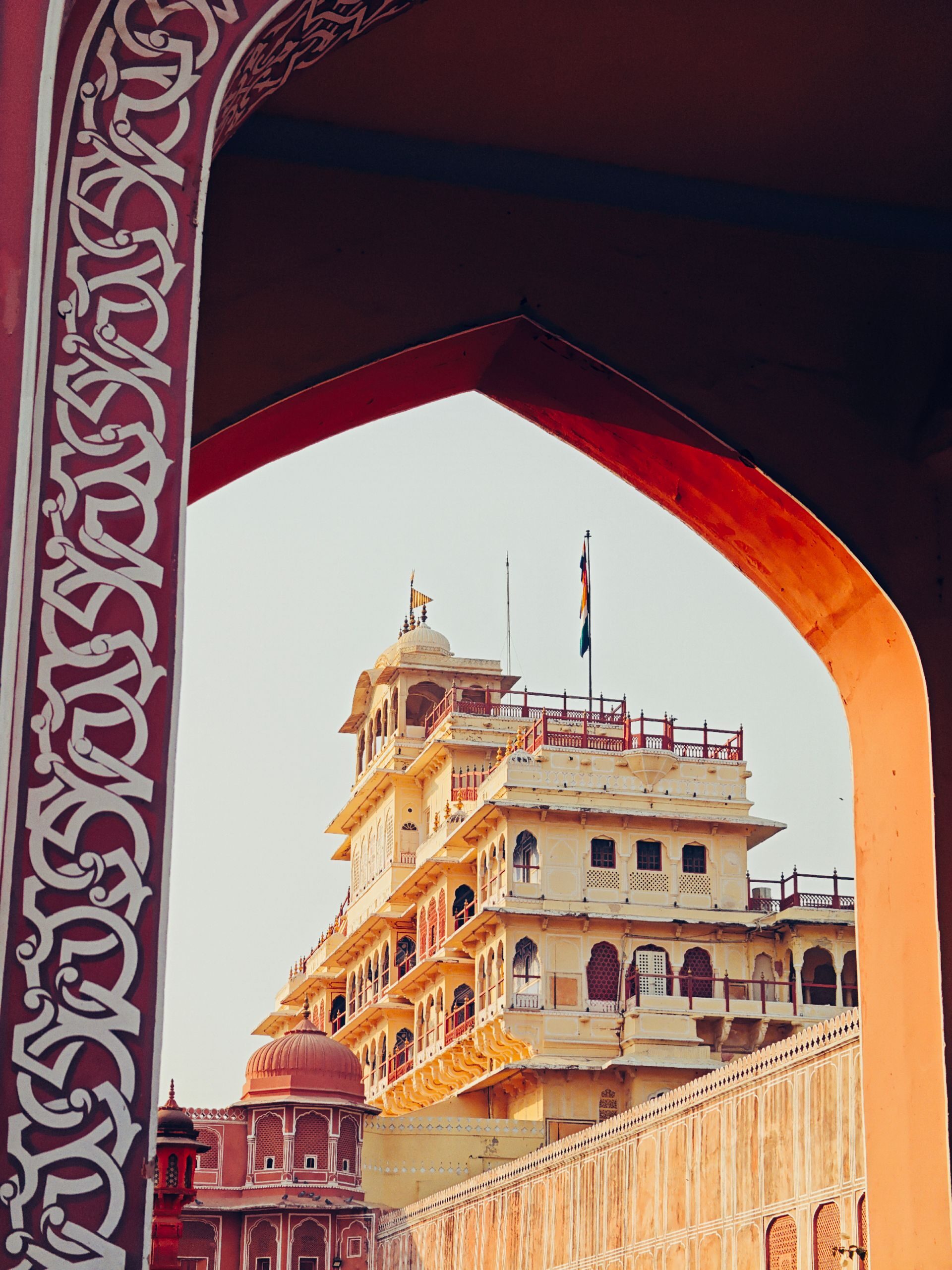
Both are in the same walled-city block, both close around five, and both are considerably more bearable in the late afternoon. Jantar Mantar makes no sense without someone explaining it — it is nineteen instruments and a lot of stone stairs otherwise — and about forty minutes with a guide turns it into the most interesting thing you see all day.
5.15pm — Hawa Mahal from the street
The famous facade faces east, into Hawa Mahal Road. The building itself takes twenty minutes from the inside and most people photograph it from the rooftop cafes opposite. Late afternoon puts the light behind you rather than in your lens.
6.30pm — Nahargarh, or the old city after dark
Two honest options, and they suit different people. Nahargarh gives you the whole city laid out below with the lights coming on. The old city at night — Johari Bazaar, Bapu Bazaar, the food streets around Chandpole — gives you the city itself rather than a view of it. Pick one. Trying to do both is how you end up doing neither properly.
What we would leave out
- Elephant rides at Amber. The welfare questions are real and unresolved. A jeep or the fifteen-minute walk up does the same job.
- A fourth fort. Jaigarh, Nahargarh and Amber in one day is one fort too many. By the third, nobody is looking.
- Any stop described as a ‘government emporium’. There is no such thing, and the commission is built into the price.
Our Jaipur day tours run this order by default, and we will change it happily if there is something you specifically want to see. What we will not do is quietly add a shopping stop to pay for the car.